George Cox and the Brothel Creeper: A Complete History
The Shoe That Keeps Coming Back
The brothel creeper is the most unlikely shoe in British fashion history. It was designed for desert warfare, adopted by Teddy Boys, revived by punks, embraced by Malcolm McLaren and Vivienne Westwood, worn on the runway by Comme des Garçons, and today sits in the permanent collections of fashion museums. And for most of that journey, one factory has been making it: George Cox in Northampton.
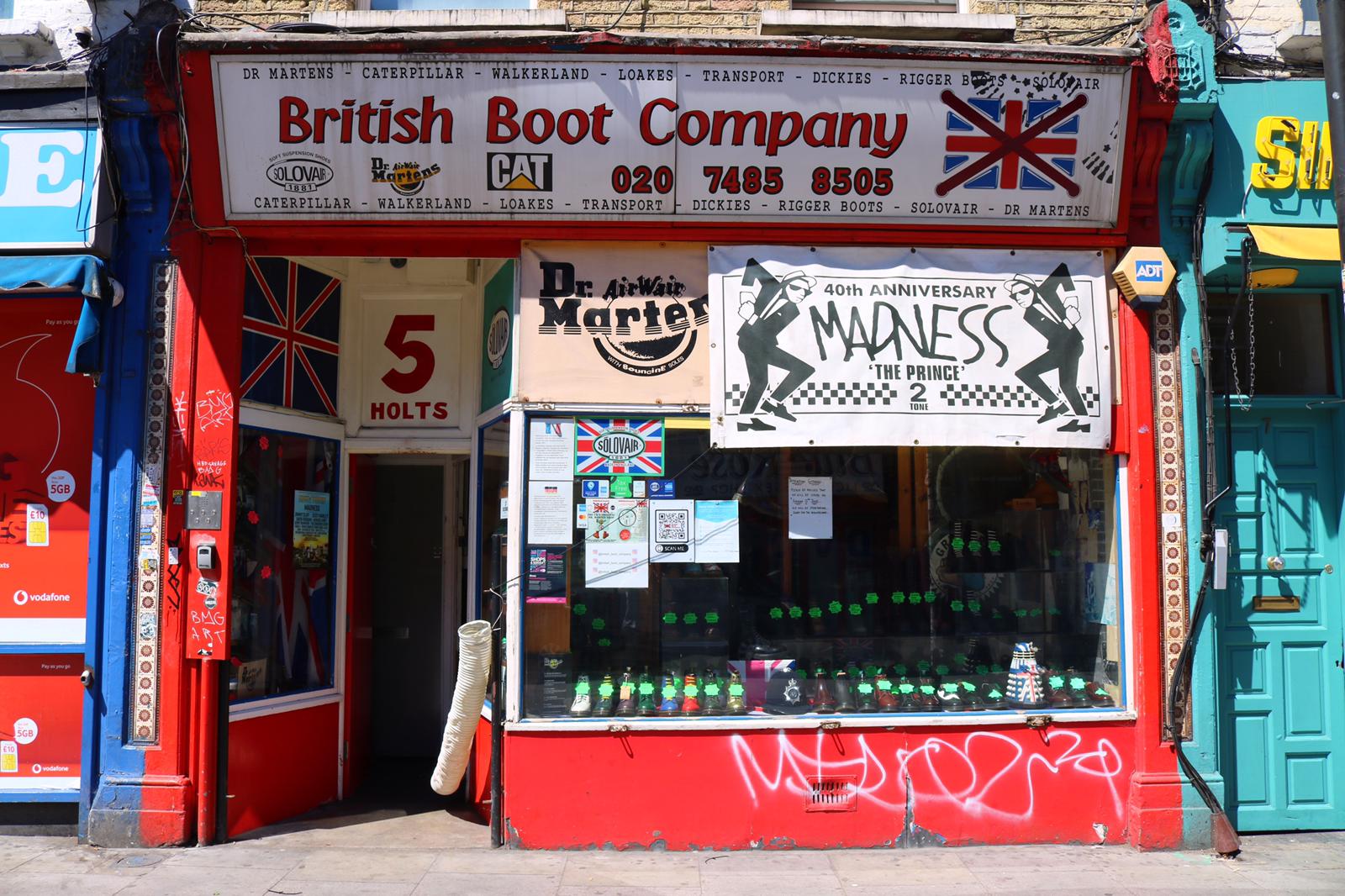
We have stocked George Cox creepers at The British Boot Company for decades. We carry the full range — including the Robot Range, which is exclusive to our shop. This is the history of the shoe, the factory, and why the creeper refuses to go away.
Origins: The Desert and the Dance Hall
The thick crepe sole that defines the creeper first appeared during the Second World War. British soldiers stationed in North Africa found that plantation crepe — natural rubber tapped from trees — made excellent soles for desert conditions. Soft, quiet, and insulating against hot sand. After the war, demobilised soldiers brought the style home.
By the late 1940s, the crepe-soled shoe had found its way into the dance halls of post-war Britain. The Teddy Boys — working-class young men who mixed Edwardian dandyism with American rock and roll — adopted the shoe as part of their uniform. They called them "creepers" or "brothel creepers," a name whose origin is disputed but whose association with after-dark subculture stuck.
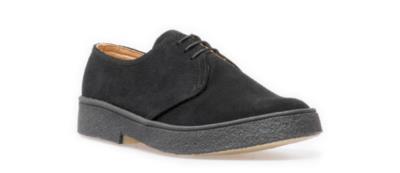
George Cox, founded in Northampton in 1906, was already an established shoe manufacturer. They began producing creepers to meet the Teddy Boy demand, and the D-Ring Creeper became their signature style — a low-profile, lace-up shoe with a thick crepe sole, suede or leather upper, and a silhouette that looked like nothing else on the high street.
Punk and the Westwood Connection
The creeper's second life began in 1976. Malcolm McLaren and Vivienne Westwood were running SEX, their shop on the King's Road in Chelsea, and outfitting the Sex Pistols. The creeper became part of the punk wardrobe — not as workwear or dance-hall dressing, but as provocation. Thick-soled, exaggerated, impossible to ignore.
Westwood continued to use George Cox creepers in her collections for decades. The shoe appeared on the runway, in Vogue, and in the V&A. It crossed from subculture into high fashion without losing its edge — largely because it never tried to be respectable. The creeper has always been a shoe for people who dress to be noticed, not to fit in.
Comme des Garçons and the Fashion World
In more recent years, George Cox has collaborated with Comme des Garçons Homme Plus — one of the most respected names in avant-garde menswear. The collaborations take the classic D-Ring silhouette and reinterpret it in premium materials, unusual colourways, and limited editions that sell out immediately.
These collaborations matter because they prove something about the factory: George Cox is not a heritage brand coasting on nostalgia. It is a working manufacturer whose product is good enough for the most demanding designers in the world to put their name on. The shoes that Rei Kawakubo sends down the runway are made in the same Northampton factory as the ones we sell from our shop in Camden.
How George Cox Creepers Are Made
Every George Cox shoe is bench-made in Northampton. That means each pair is constructed by hand on a wooden last — a solid form shaped like a foot — using traditional methods that have not fundamentally changed in a century.
The uppers are cut from full-grain leather or high-quality suede. The soles are natural plantation crepe, which gives the shoe its distinctive bounce and grip. The construction is Goodyear welted on some models, cemented on others — it depends on the style and the sole thickness.
The price reflects the process. A George Cox D-Ring Creeper starts at around £240. The Robot Range — our exclusive line — sits at £310–£375. That is not cheap, but it is the cost of a shoe made by hand in an English factory by people who have been doing this for over a century.
George Cox at BritBoot
We carry the full George Cox range — something very few UK retailers can say. The D-Ring Creeper in leather and suede, the creeper collection in multiple colourways, and the Robot Range, which George Cox produces exclusively for our shop.
The Robot creeper has its own heritage. It is named after a style that has been part of our inventory for decades — a thin-soled creeper that sits closer to the ground than the classic D-Ring. If you have visited the shop, you have probably seen Nick fitting someone in a pair and explaining the difference between the Robot sole and the standard crepe.
If you are buying your first George Cox, the D-Ring Creeper in Black Leather is where we usually point people. It is the definitive version of the shoe — the one that Teddy Boys wore, that punks wore, that Westwood put on the runway. Start there. Then come back for the suede.
George Cox vs Underground
Underground is the other name in UK creepers. They operate a shop in Soho and produce a range of creepers, platform shoes, and boots at lower price points than George Cox. The shoes are produced overseas rather than in England, and the construction and materials reflect the price difference.
If budget is your primary concern, Underground offers a way into creeper culture at a more accessible price. If construction quality, provenance, and longevity matter, George Cox is the clear choice. We stock George Cox because it aligns with what we believe in: British-made, properly constructed, built to last.
Why the Creeper Survives
Most fashion trends have a shelf life. The creeper has been in and out of style for seventy-five years, and it keeps returning because it occupies a unique space. It is not a boot. It is not a dress shoe. It is not a trainer. It is its own thing — a shoe that looks better when it is slightly battered, that works with jeans or tailoring, that signals something about the wearer without requiring an explanation.
As long as there are people who want to wear something that was not designed by an algorithm, the creeper will survive. And as long as George Cox is still making them in Northampton, we will keep selling them from Camden.
Browse the full George Cox range online, or visit us at 5 Kentish Town Road and try a pair on.