The Creeper: From Teddy Boys to Comme des Garçons
A Seventy-Five-Year Comeback That Never Ended
The creeper has been declared dead more times than any shoe in fashion history. And it keeps coming back — not as a retro novelty, but as a shoe that people actually want to wear. From post-war dance halls to punk basements to the Comme des Garçons runway, the creeper has survived because it occupies a space no other shoe fills.
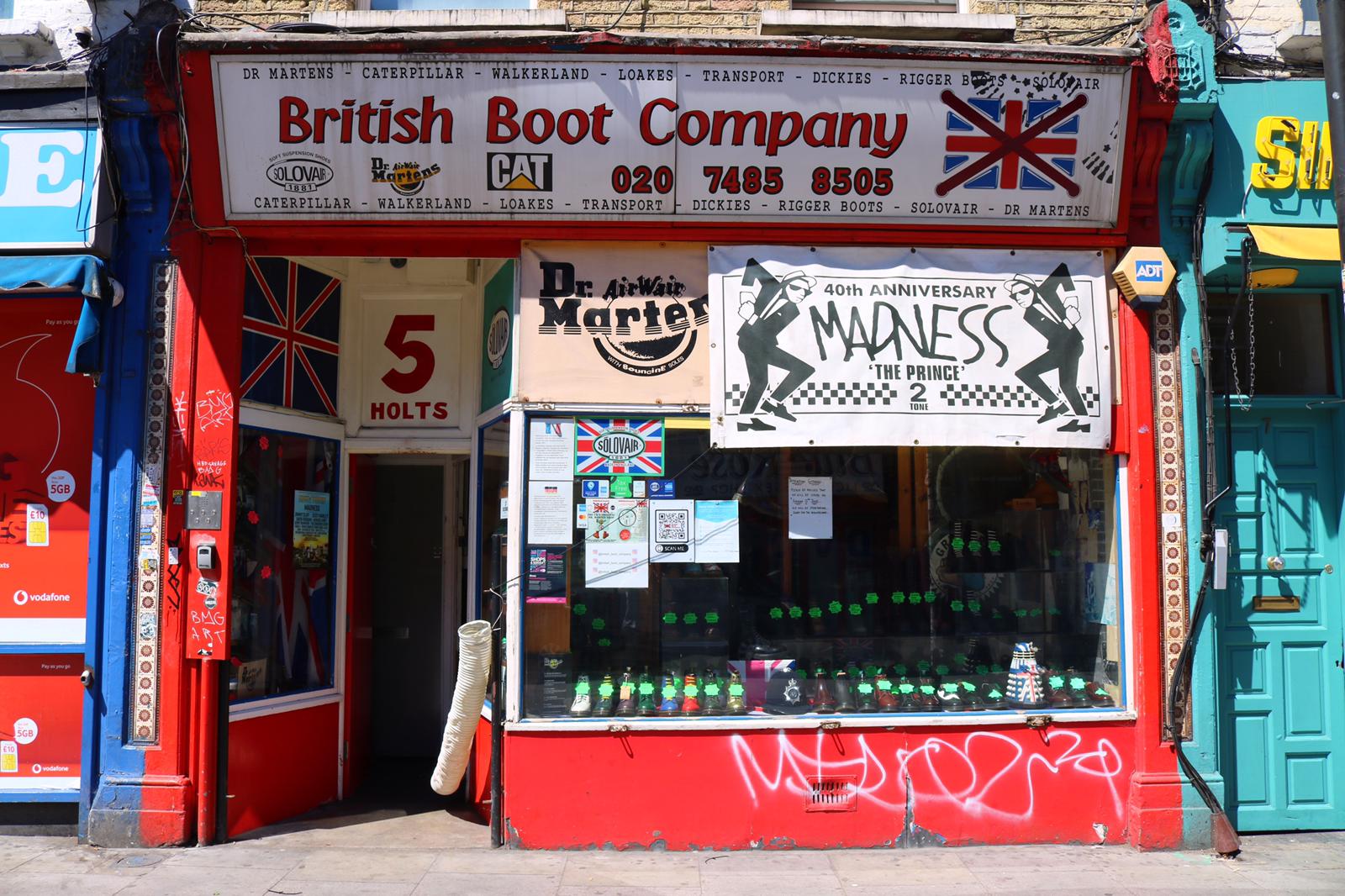
We have sold creepers from our Camden Town shop for decades. We stock the full George Cox range, including our exclusive Robot Range. This is the story of the shoe, and why it refuses to go away.
The Desert Origins
The thick crepe sole that defines the creeper originated during the Second World War. British soldiers in North Africa discovered that plantation crepe — natural rubber tapped from trees — made excellent soles for desert conditions. Soft, insulating, and quiet on sand. After demobilisation, soldiers brought the style home.
By the late 1940s, the crepe-soled shoe had found civilian life. It was not yet a fashion statement — it was a comfortable shoe with an unusual sole that showed up in dance halls and markets across Britain.
The Teddy Boys
The Teddy Boys changed everything. Working-class young men in the early 1950s adopted the crepe-soled shoe as part of their uniform — a deliberate rejection of post-war austerity combined with an unlikely admiration for Edwardian tailoring. The shoes were called "creepers" or "brothel creepers," and they became inseparable from the Teddy Boy look: drape jacket, drainpipe trousers, greased quiff, and thick-soled crepe shoes.
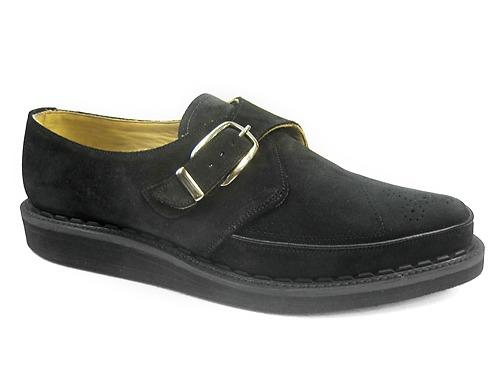
George Cox, established in Northampton in 1906, began manufacturing creepers to meet the demand. The D-Ring Creeper — a low-profile lace-up with a thick crepe sole — became their signature style and remains in production today.
Punk and the King's Road
The creeper's second wave came in 1976. Malcolm McLaren and Vivienne Westwood were running SEX on the King's Road, outfitting the Sex Pistols and inventing the visual language of punk. The creeper was part of it — not as nostalgia for the Teddy Boy era, but as provocation. Thick-soled, confrontational, impossible to ignore.
Westwood continued to use George Cox creepers in her collections for decades. The shoe crossed from subculture into high fashion without losing its edge. The creeper has always belonged to people who dress to be noticed, not to disappear.
The Rockabilly Revival
The 1980s brought a rockabilly revival that put creepers back on the street. The psychobilly movement — a fusion of punk and rockabilly — adopted the creeper as its footwear of choice. The Meteors, The Cramps, and their followers wore creepers with rolled jeans and leather jackets, connecting the shoe back to its Teddy Boy roots while adding a punk snarl.
This was also the period when the creeper began to travel internationally. Japanese subculture enthusiasts — particularly in Harajuku — adopted the shoe alongside American rockabilly and British punk aesthetics. George Cox creepers became collector items in Tokyo.
The Runway: Comme des Garçons and Beyond
In recent years, George Cox has collaborated with Comme des Garçons Homme Plus — one of the most respected names in avant-garde menswear. Rei Kawakubo's team takes the classic D-Ring silhouette and reinterprets it in premium materials, unusual colourways, and limited editions that sell out immediately.
These collaborations validate something the subcultures always knew: the creeper is a design object, not just a shoe. Its proportions, its sole, its silhouette — nothing else looks like it. Fashion designers do not collaborate with George Cox because creepers are trendy. They collaborate because the shoe is genuinely interesting and the factory can produce it to a standard that justifies a high-fashion price tag.
The Creeper Today
The creeper in 2026 is worn by a broader range of people than at any point in its history. Fashion buyers, subculture enthusiasts, vintage collectors, and people who simply want a shoe that looks different from everything else in the shop. It works with jeans, with tailoring, with skirts, with shorts. It works because it does not try to be anything other than itself.
George Cox still makes creepers in Northampton, by hand. Underground makes them overseas at a lower price point. The comparison between the two comes down to whether you want Made in England construction and premium materials or a more accessible price.
Browse the full George Cox range and the Robot Range — exclusive to The British Boot Company.