Solovair vs Dr Martens: The Complete Comparison

Why This Comparison Matters
If you're looking at Solovair and Dr Martens side by side and wondering why they look almost identical, there's a very good reason. Solovair — made by NPS Shoes in Wollaston, Northamptonshire — was the factory that manufactured the original Dr Martens boots for over thirty years. When Dr Martens moved most of its production to Asia in 2003, NPS kept making the same boots, using the same machinery and the same lasts, under the Solovair name.
We've sold both brands from our shop in Camden Town since the 1960s. We've fitted thousands of customers in each. This isn't a review based on buying one pair of each online — it's what we've learned over decades of selling, fitting, and repairing these boots every day.
History and Heritage
Dr Martens
The Dr Martens story begins in 1945 when Klaus Märtens, a German doctor, designed an air-cushioned sole to help his injured foot heal. He partnered with Herbert Funck, and the two began producing boots in Munich. In 1959, the Griggs family — shoemakers in Wollaston, Northamptonshire — spotted the design in a trade magazine and licensed it for the British market. On 1 April 1960, the first Dr Martens 1460 boot rolled off the production line.
For the next four decades, every pair of Dr Martens was made in England. The boots became standard issue for postmen, factory workers, and police officers before being adopted by skinheads, punks, mods, and goths. By the 1990s, Dr Martens had become one of the most recognisable footwear brands in the world.
Financial difficulties in the early 2000s forced a pivotal decision. In 2003, Dr Martens closed its UK factories and moved production to China, Vietnam, Laos, and Thailand. A small "Made in England" line was retained, but the vast majority of Dr Martens sold today — including the flagship 1460 — are manufactured overseas.
Solovair
When Dr Martens ended its contract with NPS Shoes in 2003, the Wollaston factory didn't close. NPS had been making boots since 1881 — long before Dr Martens existed — and they simply continued doing what they'd always done. The boots that came off the line were virtually identical to the Dr Martens they'd been producing for thirty-five years, but now they carried the Solovair name, a portmanteau of "Sole of Air."
Today, every pair of Solovair boots is still made at the NPS factory in Wollaston. The workforce, the machinery, the Goodyear welting equipment — it's all the same. Solovair has grown from a niche factory brand into a respected name in its own right, with collaborations including Carhartt WIP and a growing following among buyers who want the original Dr Martens quality without the overseas production.
BritBoot's History With Both Brands
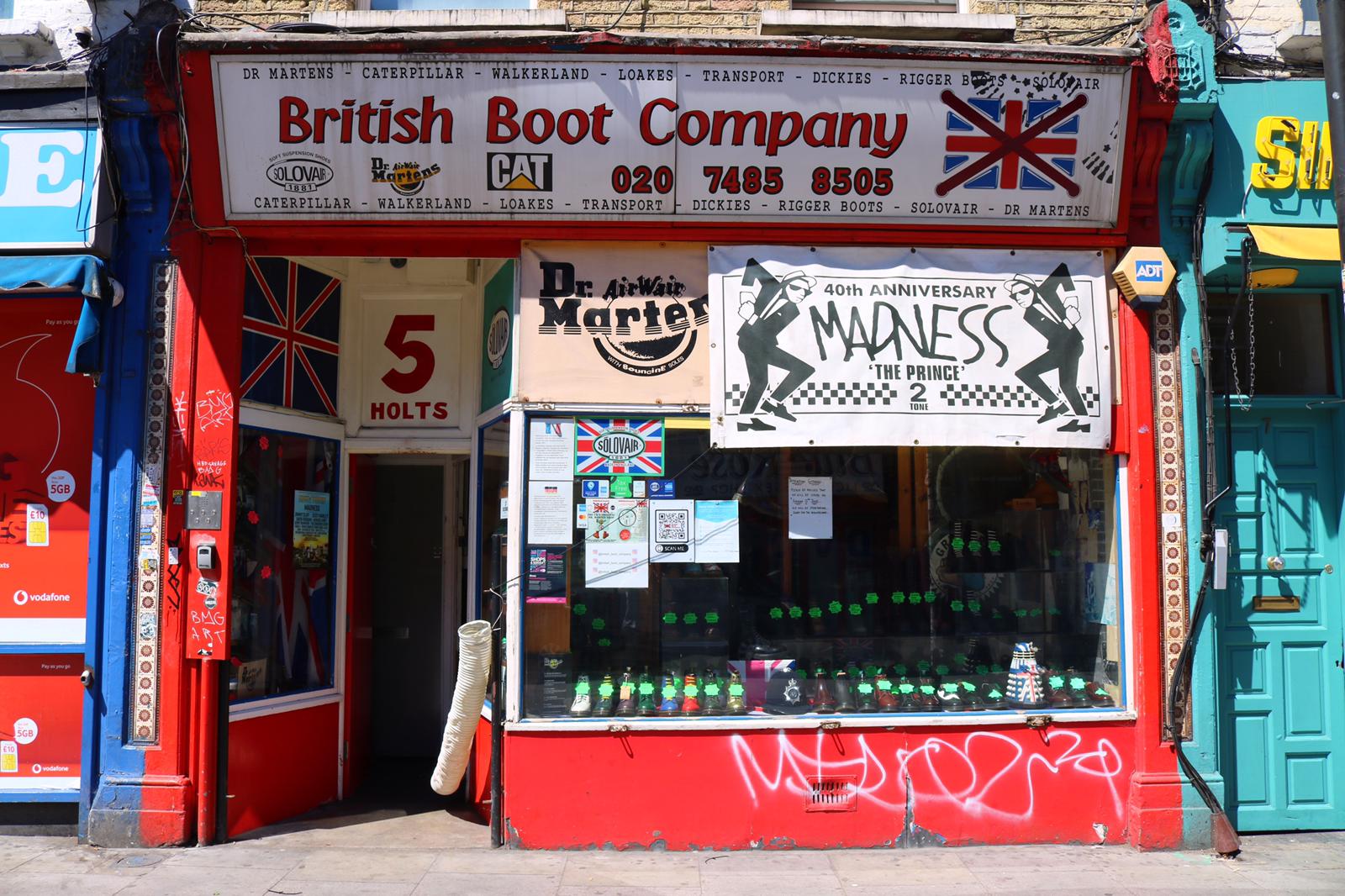
The British Boot Company has been the home of Dr Martens retail since 1958 — we were the first shop in the world to stock them. We've carried Solovair since NPS began selling under their own name, and we stock the full range of both brands' Made in England offerings. If you've ever visited our shop in Camden, you'll know that Nick will talk you through the differences in person and let you try both side by side.
Construction and Materials
Sole Construction
Both brands use an air-cushioned sole — Dr Martens calls theirs "AirWair," while Solovair's is the original "Soft Sole Suspension" technology. In practice, the feel is very similar: a bouncy, cushioned step that absorbs impact well on hard surfaces.
The key difference is in the welt. Solovair boots are Goodyear welted, which means the upper leather is stitched to a welt strip that runs around the sole. This construction method is more expensive and more time-consuming, but it means the boot can be resoled — Solovair even sells replacement soles directly. Standard Dr Martens use a heat-sealed welt, where the sole is bonded to the upper rather than stitched. This is faster to manufacture but makes resoling more difficult. The Made in England Dr Martens line uses a closer construction method to Solovair, but at a significantly higher price point.
Leather Quality
This is where the gap is most noticeable. Solovair consistently uses a thicker, tighter-grained leather across its range. The greasy and hi-shine leathers have a substantial feel straight out of the box, and they develop a genuine patina over time rather than simply cracking or peeling.
Standard Dr Martens use what the industry calls corrected-grain leather — thinner, with a coating applied to create a uniform surface. It's perfectly functional, but it doesn't age in the same way, and it's noticeably less substantial to the touch. The Made in England Dr Martens line uses Quilon leather, which sits between the two — better than the standard range, but generally still thinner than Solovair's offerings.
Solovair also sources its leather from European tanneries, while standard Dr Martens leather is sourced from Asia and South America. This isn't just a provenance point — European leather tends to have fewer defects and more consistent grain.
Stitching and Details
Dr Martens are instantly recognisable by their trademarked yellow welt stitching. Solovair uses tonal stitching — grey or matching the leather — which gives the boot a more understated, slightly dressier appearance. Some buyers prefer the bold Dr Martens look; others appreciate that Solovair can pass in more formal settings. It's a matter of taste, not quality.
Fit and Sizing
Dr Martens are known for running slightly large and are famously sold in whole UK sizes only. If you're a half size, you're typically advised to size down, which can leave you with a boot that's either slightly too snug or slightly too roomy. Break-in on standard Dr Martens can be notoriously unforgiving — the stiff leather and heat-sealed sole don't flex easily in the first few weeks.
Solovair offers half sizes across most of its range, which makes fitting significantly easier. The boots tend to run true to UK sizing. The leather is firmer out of the box — in fact, the first day in a pair of Solovairs can be tougher than Dr Martens — but because the leather is thicker and natural-grained, it moulds to the shape of your foot over time rather than simply stretching out. The leather insole also conforms to your foot, which means the fit improves with every wear.
Our advice: try both. If you're in Camden, come to the shop and we'll fit you in each. If you're buying online, order your normal UK size in Solovair and size down in standard Dr Martens.
Price and Value
Standard Dr Martens 1460 boots retail at around £170. Solovair's equivalent 8-eye derby boot sits at approximately £220. That £50 difference gets you Made in England construction, better leather, Goodyear welting, half-size availability, and a boot that can be resoled.
If you're comparing like for like — Solovair against the Dr Martens Made in England 1460 — the picture shifts further. The MiE 1460 retails at around £260–£300, making Solovair the better-value option by a significant margin for what is, in construction terms, a very similar boot made in the same region of England.
Factoring in resoling, a pair of Solovairs can last a decade or more of regular wear. Standard Dr Martens, with their bonded soles, typically last three to five years before the sole degrades beyond repair.
Who Should Buy What
Choose Dr Martens if:
- You want the iconic yellow stitching and the brand recognition that comes with it
- Budget is your primary concern and the standard range fits your price point
- You're buying for fashion rather than longevity
- You want the widest possible range of colours, collaborations, and limited editions
Choose Solovair if:
- You want Made in England construction at every price point, not just the premium line
- Leather quality and long-term durability matter to you
- You want a boot that can be resoled and will last a decade
- You appreciate the original Dr Martens quality — because this is, quite literally, the factory that made them
- You're between sizes and need a half size
BritBoot Recommends
For your first Solovair: The Solovair 8-Eye Derby Boot in Greasy Black. This is the boot that started it all — the direct descendant of the original 1460. Thick greasy leather, Goodyear welted sole, made at the NPS factory in Wollaston. If you want to understand why people switch from Dr Martens to Solovair, this is where you start.
For a Made in England Dr Martens: The Dr Martens 1460 Made in England in black or cherry. Quilon leather, made in the UK, with the classic yellow stitching. It's more expensive than Solovair, but if the DM branding matters to you, this is the one to get — not the standard range.
For something different: The Solovair Dealer Boot in Black Hi-Shine. A Chelsea-style pull-on boot with all the Solovair construction benefits. Works equally well with jeans or trousers.
The Verdict
We sell both brands, and we'll always sell both brands. Dr Martens is a cultural icon, and the yellow-stitched 1460 has earned its place in fashion history. But if you're asking us which boot is better made, which boot will last longer, and which boot offers more value — it's Solovair. Every time.
That's not marketing. That's thirty-five years of shared factory history, thousands of pairs sold from our shop, and a straightforward comparison of materials, construction, and price.
Come to the shop in Camden Town and try both. Or browse our full Solovair collection and Dr Martens collection online.