Are Dr Martens Still Made in England? What You Need to Know
The Short Answer
Some are. Most are not. And the difference matters more than you might think.
If you pick up a pair of Dr Martens from a high street retailer or from the Dr Martens website, the chances are overwhelming that they were made in China, Vietnam, Laos, or Thailand. The standard 1460, the 1461, the Jadon platform — all manufactured overseas.
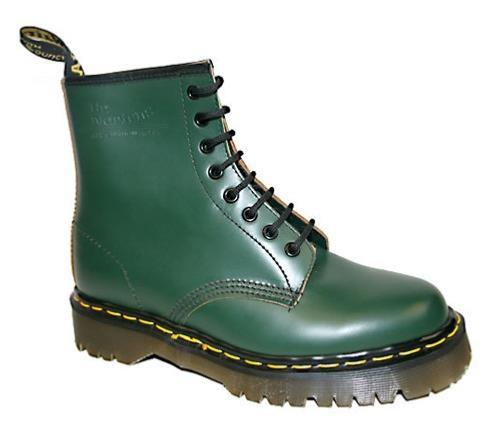
Dr Martens does still produce a small "Made in England" line. These boots are manufactured in Northamptonshire using better leather and closer construction methods to the originals. But they represent a tiny fraction of the brand's total output, and they cost significantly more — typically £260–£300 compared to £170 for the standard version.
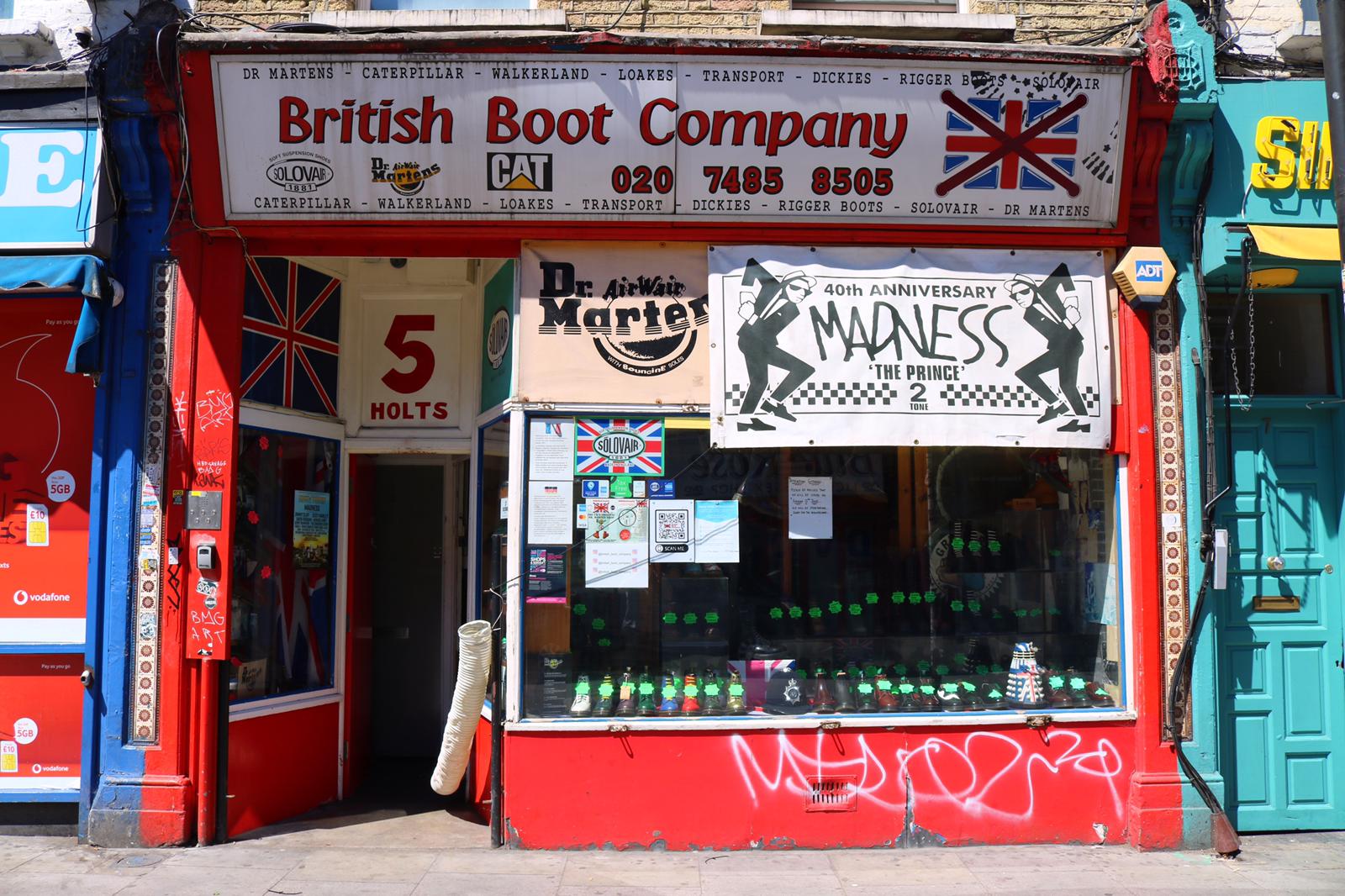
We have sold Dr Martens from our shop in Camden Town since the late 1950s — before most people had heard of them. We carry both the Made in England line and the standard range. Here is what happened, and what it means for you as a buyer.
What Changed in 2003
For the first four decades of Dr Martens' existence, every pair was made in England. The boots were produced at factories in Northamptonshire — including the NPS factory in Wollaston, which manufactured Dr Martens under contract for over thirty-five years.
By the early 2000s, Dr Martens was in financial trouble. The brand had overexpanded, fashion trends had shifted, and sales were falling. In 2003, the company made the decision to close its UK factories and move production to Asia. It was a commercial survival move, but it fundamentally changed the product.
The NPS factory in Wollaston did not close. It had been making boots since 1881 — long before Dr Martens existed — and it simply continued producing the same boots under a new name: Solovair. Same factory. Same machinery. Same Goodyear welting. Different label.
The Made in England Line
Dr Martens retained a small production line in England, producing a premium "Made in England" (MiE) range. These boots use Quilon leather — a step up from the corrected-grain leather used in the standard range — and are constructed using methods closer to the original pre-2003 process.
The MiE 1460 is a better boot than the standard 1460. The leather is thicker and more consistent. The construction is sturdier. The feel out of the box is closer to what Dr Martens used to be.
But at £260–£300, it sits in a price bracket where it faces direct competition from Solovair, which offers Goodyear welted, Made in England construction at £199–£230. We have written a detailed comparison of Solovair vs Dr Martens if you want the full breakdown.
How to Tell Where Your Dr Martens Were Made
Check the tongue. Every pair of Dr Martens has a label inside the tongue stating the country of manufacture. If it says "Made in England," it is from the MiE line. If it says "Made in China," "Made in Vietnam," "Made in Laos," or "Made in Thailand," it is from the standard range.
The Made in England range also typically features slightly different branding — the heel loop and insole will state the English origin. The boxes are usually different too, with MiE boots packaged in a more premium box with specific labelling.
On the Dr Martens website, the Made in England products are listed in a separate collection. They are not mixed in with the standard range, so it is difficult to buy one by accident — in either direction.
What You Lose When Production Moves Overseas
The most noticeable difference is the leather. Standard Dr Martens use corrected-grain leather — a thinner hide with a surface coating applied to create uniformity. It looks fine new, but it does not develop a patina. It can crack and peel rather than ageing gracefully.
The sole construction changes too. Standard Dr Martens use a heat-sealed welt — the sole is bonded to the upper with heat rather than stitched. This is faster to produce but means the boot cannot be resoled. When the sole wears through, the boot is finished.
And there are subtler differences: thread quality, eyelet consistency, sole density, insole cushioning. Individually, none of these are dramatic. Collectively, they add up to a boot that feels and performs differently from what Dr Martens used to be.
Does It Matter?
That depends on what you want from a boot.
If you want the Dr Martens look — the yellow stitching, the AirWair branding, the brand recognition — at an accessible price point, the standard range does the job. At £170, the standard 1460 is still a decent boot. It is just not the same boot it was in 1990.
If you want the original Dr Martens quality — Made in England, resolable, thick leather, long-lasting — you have two choices. You can buy the Dr Martens Made in England line at £260–£300. Or you can buy Solovair at £199–£230 and get what is, in construction terms, the same boot from the same factory that made the originals.
We sell both. We recommend both, depending on what matters to you. If the yellow stitching and the DM branding are important, buy Made in England Dr Martens. If construction quality and value matter more, buy Solovair. Either way, buy Made in England.
Where to Buy Made in England Dr Martens
We carry the Made in England range in our Camden Town shop and online. We also stock the standard range, so you can compare both in person if you visit. Nick can talk you through the differences and fit you in each.
Browse our Dr Martens collection and our Solovair collection online, or read our complete Solovair vs Dr Martens comparison for the detailed breakdown.